Reflection of Wideband Signals With Reconfigurable Intelligent Surfaces: A Tutorial
DOI:
https://doi.org/10.14209/jcis.2026.14Keywords:
Reconfigurable Intelligent Surfaces, RIS, Wideband, Orthogonal frequency division multiplexing, Frequency SelectiveAbstract
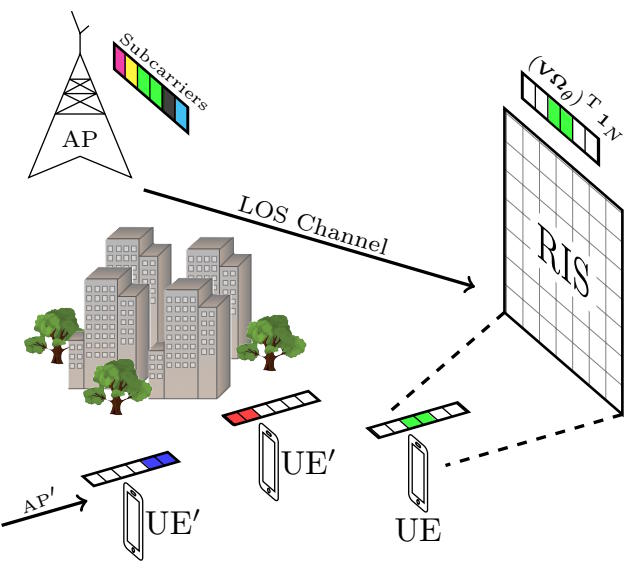
Recently, the reconfigurable intelligent surface (RIS) technology has ushered in the prospect of control over the wireless propagation environment. By establishing alternative propagation paths for the transmitted signals, and by reflecting them in a controllable manner, the RIS is able to improve the signal reception. In this tutorial, we present the fundamental modeling aspects of RIS-aided communication systems, accompanied by practical examples and intuitive explanations. The main concepts underlying wideband signal reflection with RISs systems are also explored. We, moreover, evaluate the impact of bandwidth restrictions on the wideband signal reflected by the RIS. If not carefully considered, this can become an impediment for the adoption of the RIS in the next generation of communications systems. Therefore, in this tutorial we show a RIS configuration method that provides frequency selective signal reflection for wideband signals.
Downloads
Downloads
Published
How to Cite
Issue
Section
License
Copyright (c) 2026 Pedro Henrique Carneiro de Souza, Luciano Leonel Mendes (Author)

This work is licensed under a Creative Commons Attribution-NonCommercial 4.0 International License.
Authors who publish in this journal agree to the following terms:
- Authors retain copyright and grant the journal right of first publication with the work simultaneously licensed under a CC BY-NC 4.0 (Attribution-NonCommercial 4.0 International) that allows others to share the work with an acknowledgment of the work's authorship and initial publication in this journal.
- Authors can enter into separate, additional contractual arrangements for the non-exclusive distribution of the journal's published version of the work (e.g., post it to an institutional repository or publish it in a book), with an acknowledgment of its initial publication in this journal.
- Authors are permitted and encouraged to post their work online (e.g., in institutional repositories or on their website) before and during the submission process, as it can lead to productive exchanges, as well as earlier and greater citation of published work (See The Effect of Open Access).
___________
Accepted 2026-07-20
Published 2026-07-28